Strengthening Organisational Alignment Through Strategic Internal Communications
Internal Communications Success in Complex Environments
Human-centred approach for impactful internal transformation.
Context
At GrowthAfrica Foundation, the organisation was entering a phase of strategic transition shaped by three leaders with distinct leadership approaches. While the evolving vision provided an opportunity to refine organisational direction, it also required a deliberate effort to translate leadership thinking into clear messages that employees across teams could understand, engage with, and implement.
For the transformation to succeed, the organisation needed stronger internal communication structures that would clarify priorities, encourage dialogue, and ensure teams aligned their work with the organisation’s renewed purpose.
Mandate
Entrusted with supporting the executive leadership team in translating the organisation’s strategic vision into an accessible internal communications framework.
As part of this work:
Participated in leadership meetings, strategy workshops, and organisational retreats.
Contributed communication approaches that would make the transformation clear and accessible to the broader team.
Designed communication systems that allowed employees to understand strategy, ask questions, provide feedback, and contribute to organisational changes.
The goal was not only to inform staff, but to strengthen organisational culture and alignment through transparent and engaging communication.
Strategic Actions
1. Translating Strategy into Clear Internal Narratives
Converted leadership discussions into structured internal communication materials that helped employees understand organisational direction.
These included:
Internal briefs and strategy summaries
Organisational notices and memos
Visual communication materials explaining priorities and purpose
Simplified messaging frameworks that connected strategy to daily work.
2. Creating Leadership Dialogue and Engagement
To build trust and open dialogue, I introduced structured employee engagement forums, including:
Organisation-wide town halls
Brown bag discussions
Friday social forums
Ask Me Anything (AMA) sessions with leadership.
These forums allowed employees to ask questions, give feedback, and contribute to discussions about policy and organisational change.
3. Building a Digital Internal Communications Platform
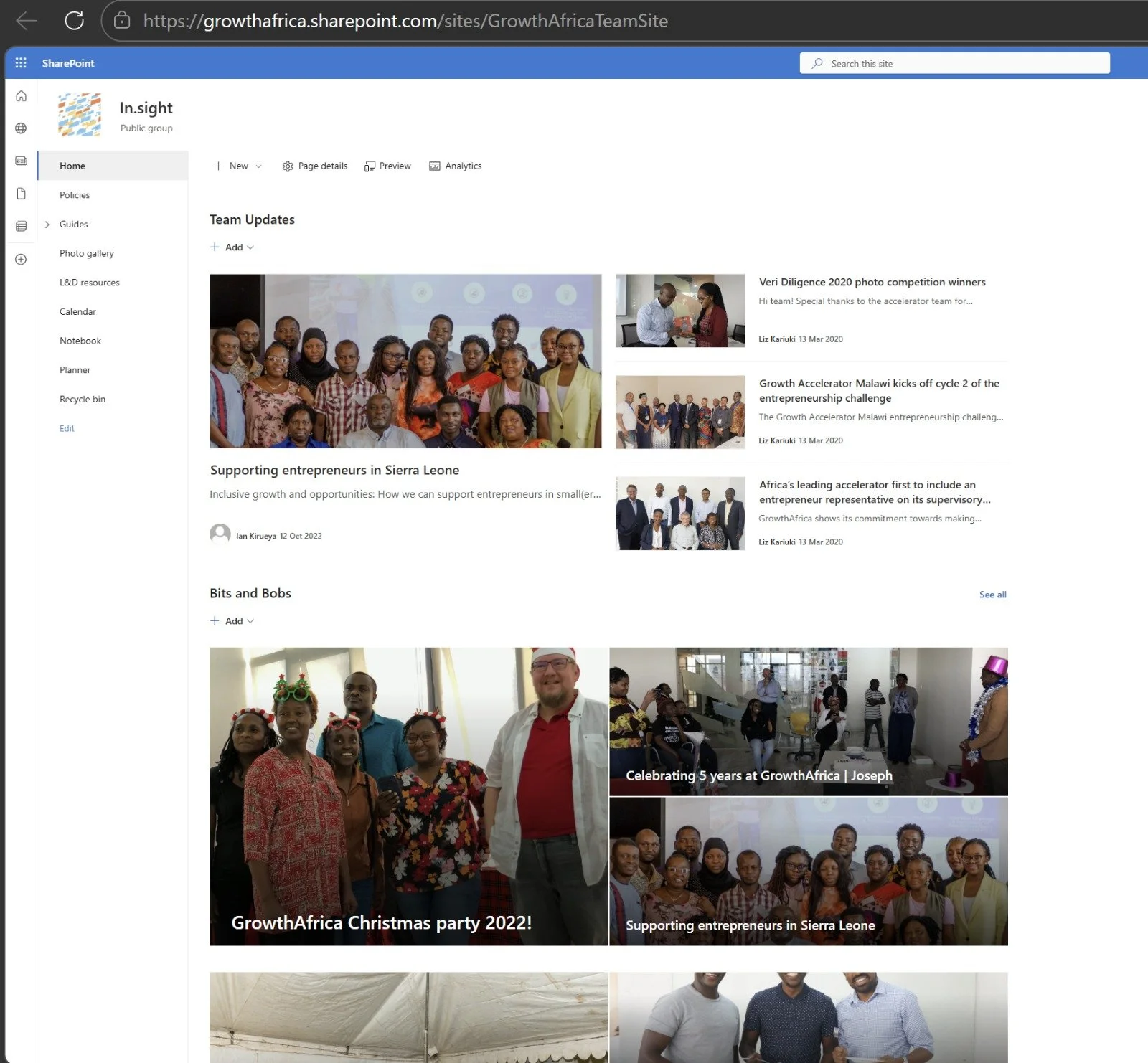
Led the activation of a Microsoft 365-based intranet ecosystem that became the organisation’s central communications and knowledge hub.
The platform integrated:
SharePoint libraries for organisational documentation
OneDrive file access for shared resources
Power BI dashboards displaying organisational data
Employee directories and collaboration tools
Viva Engage for internal broadcasting and discussion.
Through the platform:
Published weekly leadership updates and organisational news
Curated knowledge resources, including guides, templates, FAQs, policies, onboarding materials, and training videos
Enabled employee input on executive documents before finalisation through shared review systems.
4. Driving Employee Participation and Adoption
To ensure the intranet became an active communication channel rather than a static repository, I designed internal engagement campaigns encouraging employees to contribute content and knowledge.
These included:
Storytelling campaigns featuring employee stories and testimonials
Recognition posts celebrating colleagues and achievements
Collaborative team challenges
Knowledge-sharing articles and tips submitted by staff.
I also trained employees on how to use the intranet platform effectively, helping them access resources and participate in internal community groups.
5. Using Data to Inform Communication Strategy
Used the platform’s analytics capabilities to monitor engagement across internal channels.
Insights gathered included:
Which resources employees accessed most frequently
Which communication channels generated the most engagement
Participation trends across different teams.
These insights informed:
The content strategy for internal communications
Event programming and engagement initiatives
Leadership messaging addressing emerging concerns.
Introduced feedback loops through surveys, quick polls, virtual broadcasts, and open office-hour sessions that allowed employees to share perspectives throughout the transition process.
Impact
The initiative strengthened communication, transparency and alignment across the organisation.
Key outcomes included:
Improved organisational clarity around strategy and priorities
Increased employee participation in organisational dialogue and decision-making
Strong adoption of the intranet as a daily communication and knowledge platform
Enhanced leadership transparency through regular updates and engagement forums
Greater collaboration and knowledge sharing across teams
Collectively, these initiatives contributed to a broader shift toward stronger organisational culture, clearer communication practices, and improved alignment between leadership vision and team execution.
